
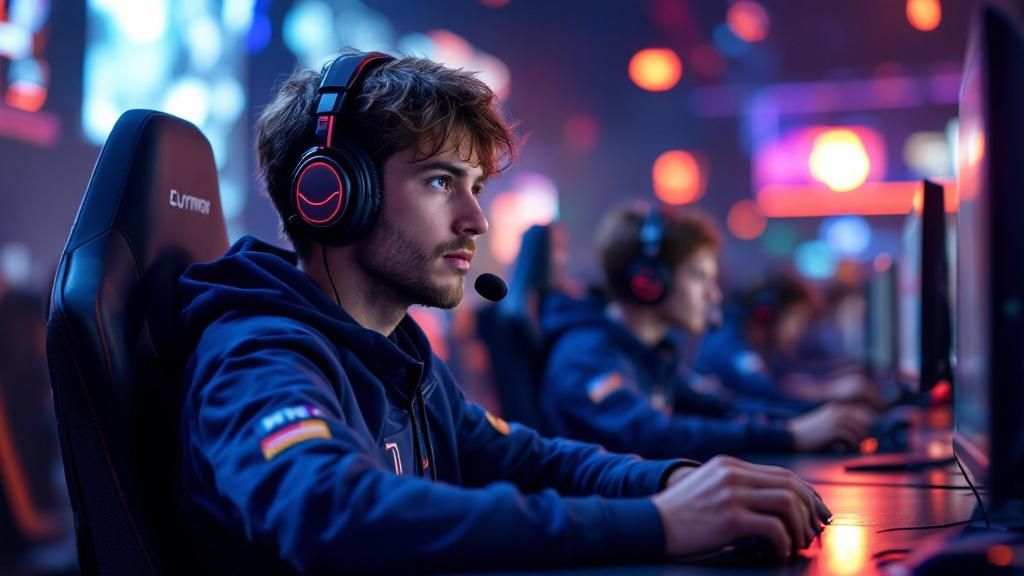
The esports industry has advanced substantially in championing competitor wellbeing. Leading esports bodies have jointly unveiled a detailed player protection standards framework, confronting persistent issues about psychological wellbeing, employment standards, and equitable treatment within professional gaming. This groundbreaking development marks a pivotal moment for esports legitimacy, setting foundational safeguards that could reshape how the industry operates. We examine the framework’s principal elements, the bodies spearheading this shift, and what it means for players and the competitive gaming landscape moving forward.
Industry-Wide Commitment to Player Health
The collaborative effort between leading esports organisations marks a watershed moment for player protection within professional esports. This unified framework demonstrates the sector’s real dedication to creating lasting protocols that emphasise player health alongside sporting achievement. By combining knowledge and capabilities, these organisations have developed detailed frameworks addressing bodily fitness, mental wellness, and occupational safety. The initiative reflects expanding understanding that player welfare directly influences output standards and career longevity, making it crucial for the sport’s credibility and growth.
Tournament organisers have recognised that previous standards were scattered and uneven, leaving players vulnerable to overwork and exhaustion. The new framework standardises expectations throughout leading tournaments, guaranteeing all professional athletes receives equitable treatment and access to essential support services. This integrated system removes unfair disparities arising from varying welfare provisions and sets fair competition standards. Industry experts highlight that these standards form essential foundations, prompting entities to surpass fundamental requirements and build authentically nurturing spaces where competitors can excel in career and personal development.
Core Features of the Welfare Provision
The newly established welfare framework comprises several interconnected pillars created to ensure player protection completely. These components tackle psychological wellbeing support, physical wellbeing, equitable employment terms, and straightforward conflict resolution mechanisms. By integrating these elements, tournament organisers seek to create a holistic approach that acknowledges esports athletes as competitive professionals deserving strong safeguards. The framework defines baseline requirements that all participating tournaments need to establish, ensuring uniform player protections across the esports competitive sector.
Mental Wellness Care Services
Recognising the emotional demands present within esports at a professional level, the framework mandates access to qualified psychologists for every competing player. Event organisers are required to provide confidential therapy services, through direct delivery or collaborative arrangements with experienced mental health organisations. This provision covers stress management, performance anxiety support, and crisis support resources. Players have access to qualified psychologists who are familiar with esports-specific pressures, such as online harassment, high-level competitive stress, and uncertain career prospects.
The framework additionally requires tournaments to introduce mental health awareness programmes and destigmatisation initiatives within the community. Organisers need to train players, coaches, and staff about recognising psychological difficulties and utilising suitable assistance. Regular check-ins and health surveillance programmes enable detect struggling players at an early stage, allowing preventative measures before situations develop into severe mental health emergencies.
Physical Wellness Requirements
Tournament operators must create detailed wellness standards tackling ergonomics, rest periods, and medical oversight. The framework stipulates appropriate chairs, display positioning, and rest periods to minimise overuse injuries common among esports professionals. Medical staff must be present at large-scale competitions to address acute health issues, whilst organisers are mandated to offer guidance about injury avoidance and appropriate healthcare resources for long-term player development.
Environmental circumstances at tournament facilities are now governed by strict requirements maintaining player wellbeing and safety. Regulations cover temperature control, lighting standards, and noise levels to deliver optimal competitive conditions. Additionally, the framework encourages players to undergo periodic health checks and offers guidance on diet, sleep hygiene, and exercise routines crucial for sustained competitive excellence in esports.
- Ergonomic equipment evaluations performed by qualified specialists
- Required breaks during competitions reducing athlete fatigue
- On-site medical staff available during all tournament proceedings
- Injury prevention training and rehabilitation service availability
- Wellness tracking systems monitoring athlete health across the year
Implementation Timeline and Requirements
The framework will be rolled out in three different phases, beginning immediately with initial evaluations across participating organisations. Tournament operators have agreed to completing initial audits of their current practices by the end of the first quarter, identifying gaps between present frameworks and the revised guidelines. This foundational phase ensures a detailed evaluation of each organisation’s baseline position before making material alterations. Subsequent phases will involve team training, policy updates, and the implementation of external compliance frameworks to secure conformity and accountability throughout the esports ecosystem.
The standards themselves cover mandatory provisions addressing mental health support, sensible practice arrangements, and transparent prize distribution protocols. Each organisation is required to appoint a designated welfare champion responsible for addressing grievances and ensuring adherence to guidelines. Periodic reviews, conducted by third-party bodies, will verify compliance and identify areas requiring improvement. These extensive protections establish measurable benchmarks for competitor welfare, with compliance procedures including monetary sanctions and possible competition restrictions for organisations not meeting required standards.
Industry Reaction and Outlook Ahead
The declaration has garnered widespread support from participants throughout the competitive gaming sector. Players’ associations have endorsed the structure as a essential move towards advancing the professional standards of the space, whilst franchise operators and sponsors appreciate the opportunity for improved legitimacy and long-term viability. Equipment suppliers and broadcast services have committed to integrate welfare considerations into their operations, illustrating a shared dedication to structural reform. Preliminary evidence point to the fact that governing authorities and state representatives perceive the criteria favourably, possibly opening the door to legislative recognition of esports as a established professional field.
Looking ahead, sector analysts predict that this framework will serve as a template for worldwide implementation, with regional tournaments and grassroots events set to adopt comparable standards. The programme is likely to encourage continued dialogue regarding athlete remuneration, career development pathways, and mental health resources. As esports undergoes rapid expansion, these welfare standards represent a crucial safeguard guaranteeing that competitive gaming stays sustainable, inclusive, and considerate for all participants, ultimately strengthening the industry’s position as a genuine professional discipline.
